Responsible nickel mining.
Creating value for generations.
At Brazilian Nickel, sustainability is embedded in the development of the Piauí Nickel Project and informs how we plan, manage, and advance our activities. Guided by Brazilian regulatory requirements and internationally recognized frameworks, including the IFC Performance Standards and the Equator Principles, we work to identify, avoid, minimize, and manage environmental and social impacts. Through ongoing stakeholder engagement and investment in local capacity and development, we seek to create lasting value throughout the project lifecycle.
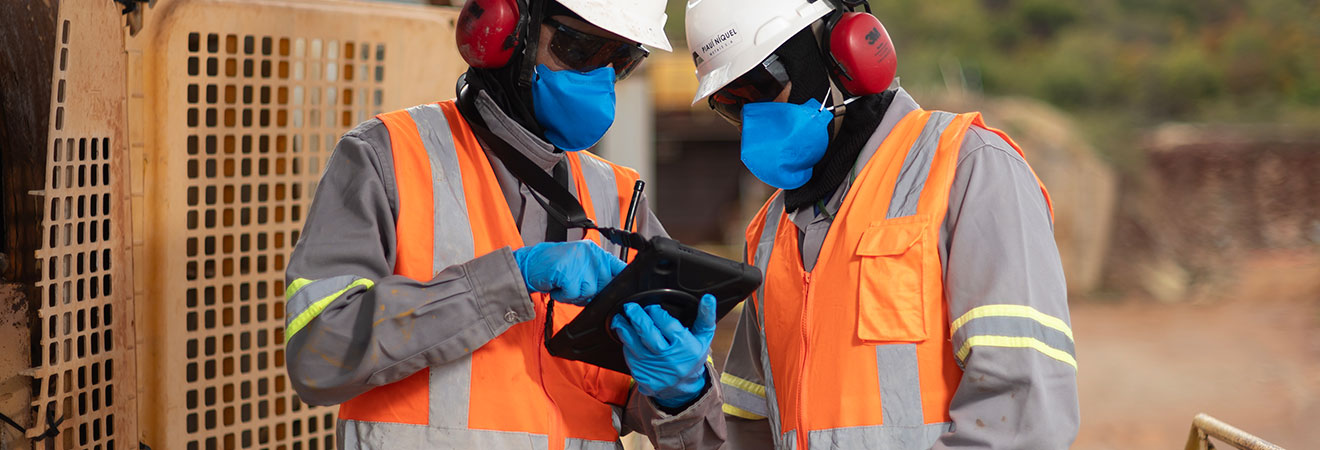
Safety is our first priority for every worker, every day.
At Brazilian Nickel, protecting the health, safety, and wellbeing of our employees, contractors, and neighbouring communities is a core value and a fundamental responsibility.
Our Health, Safety and Environment Policy is guided by a commitment to Zero Harm for people, the environment, and the communities where we operate. All employees and contractors working within areas under our operational control are covered by our Occupational Health and Safety Management System, which is aligned with Brazilian regulatory requirements, including NR-22 and NR-35, IFC guidelines, and internationally recognized industry practices.
Key elements of our safety framework include the Risk Management Program, a formal Right to Refuse unsafe work without fear of retaliation, Daily Safety, Health and Environment Dialogues conducted before each shift, the 360 Records Program for reporting unsafe conditions and near-misses, and regular Safety Leadership meetings involving senior management.
To support workforce wellbeing and emergency preparedness, the project maintains on-site health services, including first-aid facilities, occupational health professionals, access to remote psychological support, and air medical evacuation capability.
Environment
Lower-impact nickel production. Designed for environmental efficiency.
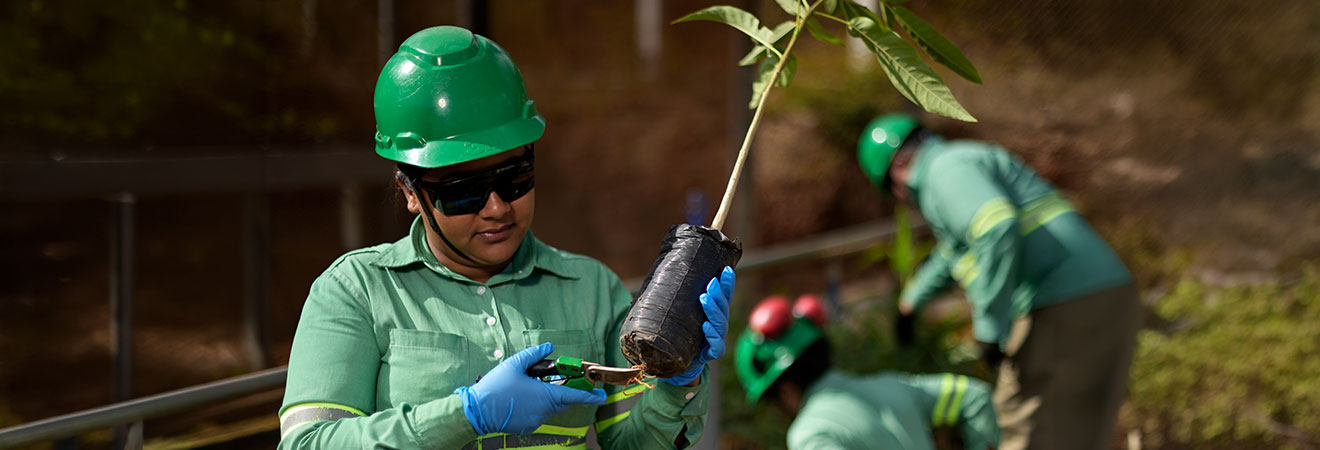
The Piauí Nickel Project has been engineered to minimise its environmental footprint while optimising resource use at every stage of production. From water recycling and dry tailings management to energy cogeneration and climate risk planning, our environmental approach reflects both technical rigour and genuine commitment to responsible resource development in Brazil's semi-arid caatinga biome.
Piauí Nickel Projetc's projected Scope 1 and 2 emissions place it below the carbon intensity of many global nickel operations. This is driven primarily by our use of heap leach technology — a low-energy hydrometallurgical process that avoids the high-carbon, energy-intensive requirements of traditional nickel smelting. The project's projected emissions. A Climate Change Risk Assessment has been completed, covering physical risks including extreme rainfall, drought, thermal stress and water availability, as well as transition risks, to support climate-resilient project design throughout the asset lifecycle. Brazilian Nickel is aligned with the GHG Protocol and continuously evaluates opportunities to reduce its carbon footprint through process optimisation, energy efficiency improvements and the adoption of lower-emission technologies.
Unlike many conventional mining operations, the Piauí Nickel Project does not generate wet tailings and does not require a conventional wet tailings storage dam. Instead, process residues are managed through a filtered residue storage system designed to enhance safety, improve water recovery, and reduce the footprint associated with conventional tailings facilities.
Following mineral processing, residues are filtered to remove a substantial proportion of moisture before being transported and placed in engineered, compacted, and monitored storage areas within the Residue Storage Facility (RSF). This approach eliminates the need for large water-retaining tailings structures and supports a more efficient overall water management strategy.
The RSF will be designed, operated, and monitored in accordance with applicable Brazilian regulatory requirements and international good practice, including alignment with the Global Industry Standard on Tailings Management (GISTM).
In addition to reducing reliance on water storage infrastructure, the filtration process enables water to be recovered and returned to the production circuit, supporting efficient resource use and responsible environmental management.
Water management is an important component of the Piauí Nickel Project. Our production process is designed to recycle between 70% and 80% of all water used, substantially reducing the need for freshwater intake. Water for operations will be sourced under a water-use authorization granted by Brazil's National Water and Sanitation Agency (ANA).
During the wet season, runoff water collected from lined areas is expected to supplement operational water needs, reducing reliance on reservoir withdrawals. Once operational, water abstraction will be continuously monitored and reported to ANA in accordance with regulatory requirements.
An integrated sulfuric acid plant will cogenerate electricity as part of Piauí Nickel Project's production process, improving overall energy efficiency and reducing the Project's dependence on external power supply. This cogeneration capacity contributes directly to lower operational emissions and supports the broader goal of cost-efficient, lower-carbon nickel production. Design improvements informed by the PNP1000 pilot plant — including energy efficiency studies, water recycling optimisation and dry tailings solutions — have been incorporated into Piauí Nickel Project's full-scale engineering.
The Piauí Nickel Project holds all key environmental licenses required to proceed to construction. Environmental licences have been issued by Piauí's State Secretariat for Environment and Water Resources (SEMARH), and a water-use authorisation has been granted by Brazil's National Water and Sanitation Agency (ANA). The project's environmental and social studies, together with the associated management programmes, have been approved by the relevant authorities, and additional permits are being managed in line with the project's development schedule.
Social & Communities
Community partnerships built on trust, transparency and shared benefit.
Community partnerships built on trust, transparency, and shared value. Strong relationships with local communities are fundamental to the long-term success of the Piauí Nickel Project. Our approach is based on open communication, transparency, and ongoing engagement with people living in the four host municipalities of Capitão Gervásio Oliveira, Campo Alegre do Fidalgo, Dom Inocêncio, and São João do Piauí.
We believe meaningful engagement starts well before construction and continues throughout the life of the project. By maintaining regular dialogue with communities, local businesses, public institutions, and other stakeholders, we seek to understand local priorities, address concerns early, manage social impacts responsibly, and identify opportunities to create shared value.
Through accessible engagement channels, structured consultation processes, and long-term partnerships, we aim to foster trust, encourage participation, and maintain constructive relationships throughout project development, operations, and closure.
Maintaining open, transparent, and regular dialogue with local communities is a fundamental part of how we develop the Piauí Nickel Project. We engage with residents, community leaders, local organizations, and public authorities across the four host municipalities to share information, understand local priorities, and build relationships based on trust and mutual respect.
Our community engagement activities began well before construction and are designed to continue throughout the project lifecycle. This ongoing dialogue helps us better understand the region's social, economic, and environmental context, identify concerns and opportunities early, and incorporate stakeholder perspectives into project planning and decision-making.
To support structured engagement, Brazilian Nickel has established ten Project Monitoring Committees, bringing together community representatives and municipal authorities for regular discussions on project developments and matters of local interest.
Alongside these formal forums, we maintain continuous engagement through a range of outreach initiatives, including Café com a Comunidade (Coffee with the Community), Cinema na Comunidade (Cinema in the Community), community visits, newsletters, meetings, and other local engagement activities. These channels help keep stakeholders informed, encourage participation, and create opportunities for ongoing feedback and dialogue.
Community members can contact us at any time through our Fale Conosco channel by phone or +55 31 99609-5931. Concerns may also be submitted confidentially through our independent reporting channel.
The Mina do Saber ("Mine of Knowledge") programme provides free vocational training for residents of the four municipalities within the project's area of influence. The programme offers courses aligned with the skills expected to be needed during the construction and operation of the Piauí Nickel Project, while also providing transferable qualifications that can support broader employment opportunities across industries and throughout the region. By strengthening local capabilities and expanding access to technical training, Mina do Saber helps build a skilled workforce that can contribute to both the project's development and the region's long-term economic growth.
Brazilian Nickel also seeks to maximize local participation in the project workforce through its recruitment and contracting practices. Supplier and contractor agreements include provisions related to local hiring, the advertisement of job opportunities through local channels, and the consideration of qualified local candidates during recruitment processes.
As the project advances and workforce requirements increase, particularly during construction, Brazilian Nickel aims to expand access to training, skills development, and employment pathways for people living in the host municipalities, helping ensure local communities are well positioned to participate in and benefit from the project's development and the region's long-term growth.
Land access and acquisition activities are conducted in accordance with applicable Brazilian legislation and guided by the principles of the IFC Performance Standard 5 on Land Acquisition and Involuntary Resettlement. Our approach seeks to ensure transparent engagement with landowners and affected stakeholders, fair compensation processes, and respect for individual rights throughout project development.
Project infrastructure has also been designed to minimise impacts on neighbouring communities where practicable.
Brazilian Nickel seeks to contribute to local development through workforce training, local procurement, community investment initiatives, and partnerships with local organizations and public institutions. These efforts are guided by ongoing stakeholder engagement and informed by local priorities and aspirations.
To support a strategic and transparent approach to community investment, the Company is developing a Private Social Investment (PSI) Plan in collaboration with local stakeholders. The plan is intended to help direct investments toward initiatives that strengthen local capacity, promote inclusion, and contribute to sustainable development. Clear guidelines for sponsorship and donation requests are also available on our website, helping ensure that community investments are managed through a consistent and transparent process.
Where technically and commercially feasible, Brazilian Nickel seeks to engage local and regional suppliers, supporting broader participation in the economic opportunities associated with the Piauí Nickel Project. As the project progresses through construction and operations, it is expected to contribute to regional development through employment, procurement, tax generation, skills development, and community investment initiatives.
Brazilian Nickel's governance framework is founded on integrity, transparency, accountability, and responsible decision-making. It supports the effective management of relationships with employees, communities, regulators, investors, lenders, suppliers, and other stakeholders throughout the project lifecycle.
Governance is led by the Board of Directors and its supporting committees, which provide strategic oversight and guidance on matters related to the Company's performance, sustainability, risk management, and long-term development.
The framework is underpinned by internal controls, delegated authorities, corporate policies, and management systems designed to promote effective oversight, ethical conduct, risk management, and continuous improvement across the organization.
Together, these mechanisms support responsible project development, strengthen stakeholder confidence, and contribute to the creation of long-term value.
Brazilian Nickel maintains regular engagement with the regulatory authorities and public institutions responsible for environmental management, water resources, mining, infrastructure, and other aspects of project development. These interactions support transparency, information sharing, effective planning, and compliance with applicable regulatory requirements throughout the project lifecycle.
The Piauí Nickel Project has secured the principal licences, permits, and authorisations required for its current stage of development. As the project progresses, Brazilian Nickel continues to work closely with the relevant authorities to fulfil permitting, monitoring, and reporting obligations, while maintaining an open and constructive dialogue on matters related to project development.
Through these relationships, the Company seeks to promote transparency, regulatory compliance, and responsible resource development, while contributing to informed decision-making and long-term stakeholder confidence.
Brazilian Nickel integrates environmental, social and governance considerations into its management and decision-making processes throughout the project lifecycle. ESG matters are managed through policies, management systems, monitoring programmes and performance indicators designed to support responsible project development, effective risk management and continuous improvement.
Our approach is informed by applicable Brazilian legislation and internationally recognised frameworks, including the IFC Performance Standards, the Equator Principles, and the GHG Protocol. These frameworks help guide the indentification, assessment and management of environmental and social risks and impacts associated with the project.
ESG performance is regularly monitored and reviewed as part of the Company's governance processes, supporting informed decision-making and accountability across the organisation.
Brazilian Nickel is committed to conducting business ethically and responsibly. Our Anti-Corruption and Anti-Bribery Policy, available on our website, establishes clear expectations for employees, contractors, suppliers, and business partners and supports a zero-tolerance approach to bribery, corruption, and other forms of unethical conduct.
Brazilian Nickel provides multiple channels through which community members, employees, contractors, suppliers, and other stakeholders can contact the Company, raise concerns, seek information, or provide feedback.
Our Fale Conosco channel is available free of charge by phone or +55 31 99609-5931 and serves as a direct point of contact for questions, information requests, suggestions, community concerns, and other project-related matters. The channel is designed to support timely responses and ongoing dialogue with stakeholders.
For concerns related to ethics, compliance, misconduct, fraud, corruption, discrimination, harassment, or potential violations of company policies or applicable legislation, stakeholders can access our independent Transparency Channel. Reports may be submitted confidentially and anonymously.
These channels complement our broader stakeholder engagement approach, providing accessible mechanisms for communication, feedback, and grievance resolution, alongside initiatives such as Project Monitoring Committees, Café com a Comunidade ("Coffee with the Community"), and other community engagement activities.
Risk management is integrated into all stages of project development. Brazilian Nickel regularly assesses environmental, social, operational, and business risks and uses this information to support planning, decision-making, and project design.
This includes evaluating climate-related risks and opportunities, monitoring project performance, conducting inspections and audits, and reviewing management plans and mitigation measures as project conditions evolve.
The Piauí Nickel Project is subject to regulatory oversight, environmental licensing requirements, and independent technical reviews. Environmental and social studies, permitting processes, and water-use authorisations have been assessed by the relevant authorities in accordance with applicable Brazilian regulations.
Brazilian Nickel also maintains processes to support compliance with Brazil's General Data Protection Law (LGPD), including the appointment of a Data Protection Officer (DPO).
The PNP1000 plant has achieved the Nickel Mark, an internationally recognized assurance framework for the nickel industry that assesses participating sites against a set of environmental, social, and governance, criteria for responsible production.
As the Piauí Nickel Project advances, Brazilian Nickel will continue to align its management systems and practices with applicable standards and recognized industry frameworks, supporting transparency, accountability, and continuous improvement throughout the project lifecycle.
Documents & Reports
Access sustainability reports, policies, and key corporate documents.
Guidance on requesting sponsorships, donations, and support through Brazilian Nickel's private social investment initiatives. Requests should be submitted through our Contact Us channel.
Your privacy is important to Brazilian Nickel.
We use cookies to enhance your experience, remember your preferences, and analyze our website traffic.
For more details, read our
Privacy Notice.
Your privacy is important to Brazilian Nickel
PRIVACY NOTICE
Brazilian Nickel (BRN)
OBJECTIVE
Brazilian Nickel (“BRN”) recognizes the importance of protecting personal data and is committed to processing this information in a transparent and secure manner, in compliance with the Brazilian General Data Protection Law (Law No. 13,709/2018 – LGPD).
For this reason, we have prepared this Privacy Notice (“Notice”), which aims to clearly and accessibly explain how your personal data is collected, used, stored, shared, and protected during your relationship with BRN.
In this Notice, you will find information about which personal data may be processed by BRN, the respective purposes, any potential sharing, how long the information may be stored, the technical and organizational measures adopted to protect your data, and your rights as a data subject and how to exercise them.
This Notice may be updated whenever there are changes to our personal data processing activities, changes in applicable legislation, or a need to improve the information provided herein. Whenever this occurs, the most recent version will be made available through BRN’s official channels. For this reason, we recommend consulting this document periodically.
If you have any questions about this Notice or the processing of your personal data, please contact us at dpo@brnickel.com.
SCOPE
This Privacy Notice applies to all users of our website (https://www.braziliannickel.com), our contractors, service providers and suppliers, job applicants, employees’ dependents, and visitors who have a relationship with BRN.
In addition, all BRN employees, service providers, and contractors must comply with this Notice to ensure the security and privacy of personal data throughout all stages of processing.
TERMS AND DEFINITIONS
To facilitate understanding of this Notice, the main concepts used are defined below:
Term
Acronym
Definition
Anonymization
-
Use of reasonable and available technical means at the time of processing through which data loses the possibility of being directly or indirectly associated with an individual.
Brazilian Data Protection Authority
ANPD
The federal regulatory authority responsible for overseeing, implementing, and enforcing compliance with the LGPD throughout Brazil.
Controller
-
An individual or legal entity, under public or private law, responsible for decisions regarding the processing of personal data.
Personal Data
PD
Information relating to an identified or identifiable natural person.
Data Protection Officer
DPO
A person appointed by BRN to act as a communication channel with data subjects and the competent government authorities.
Data Subject
-
Any identified or identifiable natural person to whom the processed personal data relates.
Processing
-
Any operation performed on personal data, including collection, production, receipt, classification, use, access, reproduction, transmission, distribution, processing, storage, archiving, deletion, assessment or control of information, modification, communication, transfer, dissemination, or extraction, among other acts, carried out with personal data under BRN’s custody.
WHAT DATA DO WE PROCESS AND FOR WHAT PURPOSES
If you have applied for a position at Brazilian Nickel, we may process the following data:
Purpose
Processed Data
Recruitment and Selection Process
Full name, professional history, language, education, HR information, CPF (Brazilian individual taxpayer ID), date of birth, address.
The recruitment and selection process is conducted with the support of Gupy, a third-party platform specialized in recruitment and selection. Accordingly, part of the processing of your personal data will be carried out by this company, in accordance with its own applicable purposes and responsibilities.
We also recommend that you read Gupy’s Privacy Policy to understand how your personal data is collected, used, stored, and protected while using the platform. Gupy’s Privacy Policy is available through its online environment.
WEBSITE USERS
When you browse our website, we may record the activities you perform to improve your user experience, including collecting cookies and access log and IP information.
Regarding cookies, our website uses the following types of cookies:
Strictly Necessary Cookies (Always active) These are essential to ensure the secure and proper operation of the Brazilian Nickel website. These cookies allow the page to perform basic functions and operate correctly and cannot be disabled in our systems.
Functionality Cookies These are used to provide a more personalized experience on our website, allowing us to record and remember your choices and preferences (such as your region or language).
Analytics or Performance Cookies These are used to collect aggregated information about traffic on our website. These cookies help us understand how visitors interact with the page, allowing us to identify which areas are visited most frequently, monitor errors, and improve the overall performance of the Brazilian Nickel website.
You may block the use of cookies at any time by changing your internet browser settings. Your ability to limit cookies will be subject to your browser’s settings and limitations. You may also delete existing cookies through the same browser settings. If you choose to disable cookies, you may continue browsing the website, but some pages may not function properly or may cease to function.
In addition, BRN provides a Transparency Channel through its website. Personal data of reported individuals may be entered into the channel, as may the personal data of a complainant who chooses to identify themselves, with confidentiality of the information ensured. This data is processed for the purpose of investigating ethical and integrity violations involving our employees and business partners.
When using the Contact Us channel, BRN may process the personal data you provide, such as your name, telephone number, and other information included in your message, for the purpose of reviewing, responding to, and following up on your request, as well as maintaining the records necessary for service and relationship management.
CHILDREN AND ADOLESCENTS' DATA
Brazilian Nickel may process personal data of children and adolescents only when strictly necessary for the development of its activities and in compliance with applicable legislation, especially the Brazilian General Data Protection Law. Whenever applicable, processing will be carried out in accordance with the best interests of the child or adolescent and other applicable legal requirements.
Our website is not directed at children or adolescents and does not intentionally collect their personal data. If it is identified that personal data of children or adolescents has been collected inadvertently, Brazilian Nickel will take the appropriate measures to stop the processing and securely delete such information, except where its retention is required by legal or regulatory obligations.
SHARING
Brazilian Nickel may share your personal data whenever such sharing is necessary for the development of its activities, compliance with legal or regulatory obligations, performance of contracts, the exercise of rights, or to meet other circumstances authorized by the Brazilian General Data Protection Law. In such situations, personal data may be shared, as applicable, with:
a) Public Administration bodies and entities, judicial, administrative, or regulatory authorities, where required by law, by a competent order, or where necessary for the regular exercise of rights;
b) Financial institutions and companies responsible for processing payments and other financial transactions;
c) Technology, hosting, cloud storage, corporate systems, IT infrastructure, technical support, and information security providers;
d) Service providers and business partners that assist BRN in carrying out its activities;
e) Consultants, auditors, law firms, and other specialized service providers;
f) Other companies or third parties whenever sharing is necessary for the provision of services, compliance with legal obligations, performance of contracts, or to meet BRN’s legitimate purposes, within the limits of applicable legislation.
In addition, personal data may be accessed by BRN employees and authorized individuals exclusively to the extent necessary to perform their duties and in accordance with the principles of necessity and least privilege.
Whenever third parties process personal data on behalf of BRN, they will act in accordance with the instructions provided by the company and will be subject to contractual obligations regarding confidentiality, information security, and personal data protection, as well as compliance with the LGPD and other applicable regulations.
BRN adopts appropriate technical, administrative, and organizational measures to ensure that all sharing of personal data occurs securely, following adequate standards of protection against unauthorized access, loss, alteration, disclosure, or any improper or unlawful processing.
Brazilian Nickel does not commercialize, sell, or exchange personal data. All sharing occurs only when necessary to fulfill the purposes described in this Notice or under other circumstances authorized by applicable legislation.
PERSONAL DATA RETENTION PERIOD
Brazilian Nickel will retain personal data only for as long as necessary to fulfill the purposes for which it was collected, observing the principles of necessity and minimization established by the Brazilian General Data Protection Law (LGPD).
Where applicable, personal data may be retained for longer periods whenever necessary to comply with legal or regulatory obligations, exercise rights in judicial, administrative, or arbitration proceedings, or meet other retention circumstances authorized by applicable legislation.
Once the applicable retention period has ended and there is no legal basis justifying continued retention of the personal data, it will be securely deleted or anonymized, except where otherwise provided by applicable legislation.
INTERNATIONAL TRANSFERS
In certain circumstances, Brazilian Nickel may transfer personal data internationally, including when using technology services, cloud storage, corporate systems, or service providers located outside Brazil or that process data outside Brazilian territory.
Whenever personal data is transferred internationally, Brazilian Nickel will adopt the measures necessary to ensure that the processing complies with the LGPD, particularly Articles 33 and following, as well as the mechanisms and requirements established by the ANPD, ensuring an adequate level of protection for personal data and respect for data subjects’ rights.
SECURITY MEASURES
Brazilian Nickel adopts appropriate technical, administrative, and organizational measures to protect personal data against unauthorized access, destruction, loss, alteration, disclosure, or any improper, unlawful, or accidental processing. The security measures adopted include:
Strict Encryption in Transit (HSTS): Use of the Strict-Transport Security header to ensure that all connections are made exclusively through secure HTTPS, preventing data interception;
Protection Against Cloning and Clickjacking: Implementation of the X-Frame Options (DENY) directive, which prevents the website from being maliciously embedded within other pages;
Code Injection Prevention (XSS): Active implementation of X-XSS-Protection policies and mitigation through Content-Security-Policy (CSP);
Logical Access Control Mechanisms: Strictly based on the principle of least privilege, in addition to antivirus tools and managed firewalls;
Business Continuity and Monitoring Policies: Periodic backup routines and active management of information security incidents.
Although reasonable efforts are made to protect personal data, no security system is completely infallible. For this reason, Brazilian Nickel continuously monitors its processes and seeks to adopt applicable best practices to reduce risks and strengthen the protection of the information it processes.
YOUR RIGHTS AS A DATA SUBJECT
You, as a data subject, may exercise the following rights at any time:
Confirmation of Processing and Access to Personal Data
You may request that BRN confirm whether it processes your personal data and inform you which personal data it holds about you. BRN will provide the categories of personal data and how long the personal data will be stored.
Data Portability to Another Service or Product Provider
Where applicable, you may request that BRN transmit the personal data it holds about you to another data controller, ensuring that the data is transmitted with an appropriate level of security, subject to BRN’s commercial and industrial secrets.
Information About Entities with Which BRN Has Shared or Shares Data
You may request that BRN provide information regarding the sharing of your personal data with third parties.
Correction of Incomplete, Inaccurate, or Outdated Data
If you find that your personal data is incomplete, inaccurate, or outdated, you may request that BRN correct or supplement it.
Information About the Possibility of Withholding Consent
If BRN requests your consent for a specific processing activity, you may ask BRN to clarify whether the activity can be carried out without your consent or what the consequences of not providing consent would be in that case.
Anonymization, Blocking, or Deletion of Unnecessary, Excessive, or Illegally Processed Data
If any personal data is processed unnecessarily, excessively for its intended purpose, or in violation of the LGPD, you may request that BRN anonymize, block, or delete such data, provided that the excess, lack of necessity, or legal non-compliance is effectively established.
Withdrawal of Consent
You may request withdrawal of the consent you have provided for the processing of your data at any time. BRN will contact and communicate with other organizations where the data subject’s personal data is being processed in order to stop the processing in accordance with the data subject’s request. Please note that withdrawal of consent may result in the termination of services provided, but does not prevent the use of anonymized data or data whose processing is based on another legal basis provided for under the LGPD.
Complaint to the ANPD
You may file a complaint with the ANPD regarding your personal data. You may also contact us at any time through one of the channels indicated at the end of this section. We will be available to assist you with your request.
Deletion of Personal Data
If you have provided consent for the processing of your personal data for specific purposes (and purposes that are not necessary for the provision of our services or delivery of our products), you may request the deletion of such personal data. Please note that where personal data is retained or stored due to circumstances such as a legal or regulatory obligation, it may be retained or stored regardless of the data subject’s consent.
Objection to Irregular Processing
You may object to the processing of your personal data if it is determined that the processing is irregular. BRN will take appropriate measures without undue delay in the event of a challenge to the processing of data, in whole or in part.
Review of Automated Decisions
You may challenge decisions made solely on the basis of personal data processed by automated means that affect your interests, such as decisions intended to determine your personal, professional, consumer, or credit profile or aspects of your personality, and you may request information about the criteria and procedures used for the automated decision, subject to commercial and industrial secrets.
To exercise your rights, simply access our data subject request portal through the email address dpo@brnickel.com.
Your request will be answered within 15 (fifteen) days, as determined by the LGPD. If a longer period is necessary, we will contact you to inform you of the new deadline and the reasons for it.
Please note: Your rights are not absolute and do not always apply in every situation, but we will always do everything we can to uphold your rights under applicable data protection laws. If your request is denied, we will explain the reasons why we are unable to fulfill it.
Brazilian Nickel may update this Privacy Notice at any time to reflect changes in its personal data processing activities, changes in applicable legislation, or improvements to its privacy and data protection practices.
We recommend consulting this Notice periodically so that you remain informed about how we process your data.